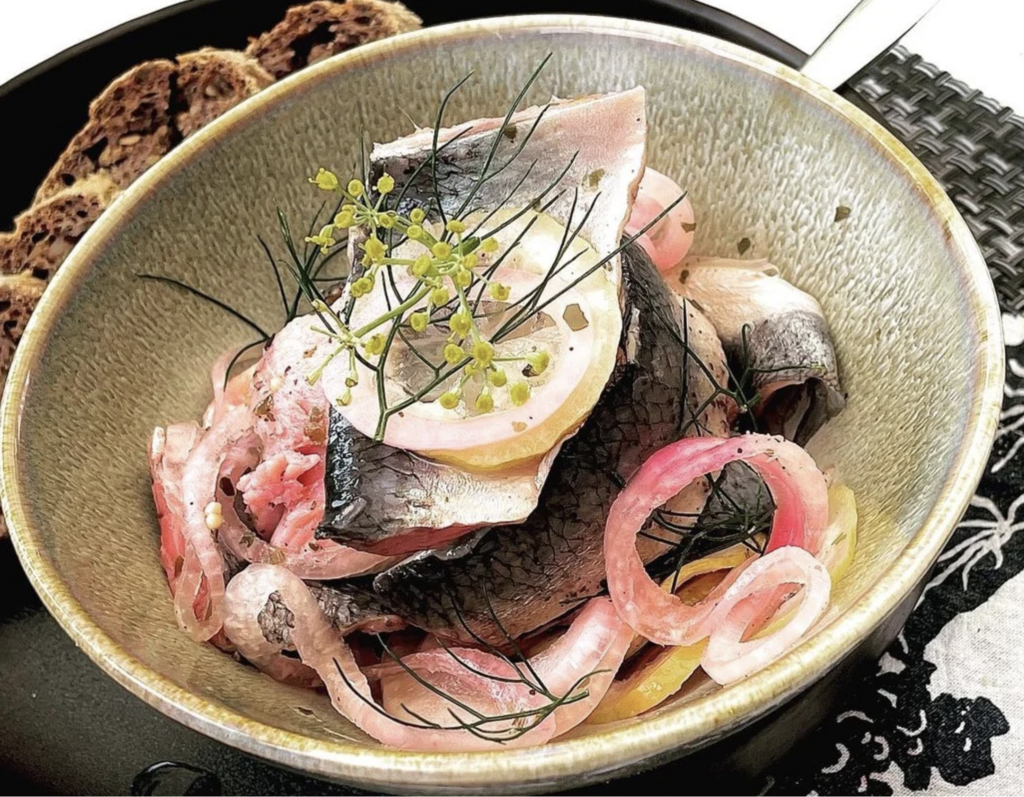
Pickled Herrings
If you, like me, follow current nutritional guidelines and want to increase your omega-3 intake for better health, mental clarity, and more efficient cell membranes, you may want to include more fatty fish in your diet than the average person does. Plant-based options are very limited, and converting to DHA isn't as easy as it seems, since many enzymes are involved and each conversion requires cofactors and a lot of energy. The human body converts plant-based alpha-linolenic acid (ALA) into the more biologically active eicosapentaenoic acid (EPA) and docosahexaenoic acid (DHA) at a generally low rate, typically estimated at under 15% overall, with around 5%–10% converting to EPA and 1%–5% converting to DHA.[1]
You will need an enormous quantity of linseed oil to meet your basic requirements.[2]
Fatty fish requires no conversion because its omega-3s are already in the active EPA and DHA forms, and your body absorbs around 95% of them. My personal favourites include marinated anchovies, sardines (whether grilled, butterflied, or in tomato sauce), pickled herring, mackerel, and a variety of preparations featuring sockeye salmon.
On the other hand, I generally avoid certain types of fish, particularly farmed varieties like sea bream, sea bass, and salmon, for they are typically diseased, injected with dyes to look pink instead of greyish (even organic salmon is preferably avoided. Organic simply means that the salmon is fed organic wheat-based flour mixed with corn and other cheap grains, none of which are part of their natural diet), as well as predatory fish known for higher toxin concentrations, such as tuna, Chilean sea bass, swordfish, and cod (which I limit to no more than one portion per month). Research suggests that these fish can be as 'toxic' as conventional meat while offering minimal nutritional benefits. Furthermore, the environmental impact of farm-raised fish is concerning, as they can introduce diseases and pests to wild fish populations.
Herring, with its delicate flavours, tends to spoil quickly, making salting, pickling, or smoking common preservation methods.
While I have enjoyed herring in all these forms, there’s something unique to pickled herring.
Imagine tender herring fillets marinated in zesty vinegar and vibrant lemon. It's a tango of flavours, where the tartness of the vinegar and lemon dance gracefully with the herring’s rich omega-3 goodness. But there’s more to this composition: a sprinkle of spices, a dash of sugar, and a chorus of onions and herbs, each adding its unique charm to this culinary symphony.
An insider tip: Many pickled herring recipes start with pre-salted herring from cans. If you choose these, skip the initial salt brine. Instead, soak them in fresh water overnight; they will retain their sea-salty charm.
Here is the magic trick: A hint of salt is crucial to keep the herring from turning into mush. Trust me; I have learned the hard way. Without salt, it will become a culinary disaster.
The best part?
These pickled herring bites are versatile. Whether enjoyed as a snack, paired with pumpernickel, rye bread, or gluten-free sourdough, served alongside potatoes, or placed on a simple cracker, they shine.
They also make a delightful pre-dinner treat (tapas) to enjoy with a glass of chilled white wine or rosé, and they'll amaze your guests. I have even added them to Niçoise salads with butter beans. The result is absolutely out-of-this-world-delicious.
Discover pickled herring. A symphony of flavours, a nod to tradition, and a feast for the senses. Immerse yourself in this culinary masterpiece and let your taste buds savour the harmony of the sea.
Sources:
1. NIH. (2025). Omega-3 Fatty Acids Fact Sheet for Health Professionals. Available: https://ods.od.nih.gov/factsheets/Omega3FattyAcids-HealthProfessional/#en29
2. Bodyur, M., Yılmaz, B., Ağagündüz, D. (2025). Immunomodulatory Effects of Omega-3 Fatty Acids: Mechanistic Insights and Health Implications. Molecular Nutrition & Food Research. 69(12), e202400752. doi:10.1002/mnfr.202400752
Recipe
Serves: 4
Prep time: 20 minutes
Equipment: kitchen bowl, glass jar
Recipe:
1 litre water (5 cups), divided
450 g herring fillets (1 pound)
450 ml distilled or white wine vinegar (2 cups)
55 g Celtic or grey sea salt (1/4 cup)
50 g sugar (1/4 cup)
3 bay leaves
3 cloves
2 tsp peppercorns (a mix of black and pink, preferably)
1 tsp mustard seed
1 tsp fenugreek
1 tsp whole allspice
1 lemon (thinly sliced)
1 medium red onion (thinly sliced)
Method:
- Heat 750 millilitres of water to dissolve the salt, then leave to cool at room temperature.
- Once cooled, add the herring fillets to the brine and refrigerate overnight for at least 12 hours.
- Bring the sugar, vinegar, the remaining water and all the spices to a boil. Simmer for 5 minutes, then turn off the heat. Set aside to infuse until completely cool.
- When the herring fillets have brined, layer them in a glass jar with the sliced lemon and red onion. Pour the marinade over to cover, and add a few more lemon slices to ensure the herring pieces stay fully submerged.
- Seal the jar and refrigerate for at least 24 hours before eating. Store in the fridge for up to 1 month.
Tip: You may divide the marinade between different containers if you are using more than one. Always make sure that there is enough liquid to cover the herring pieces.
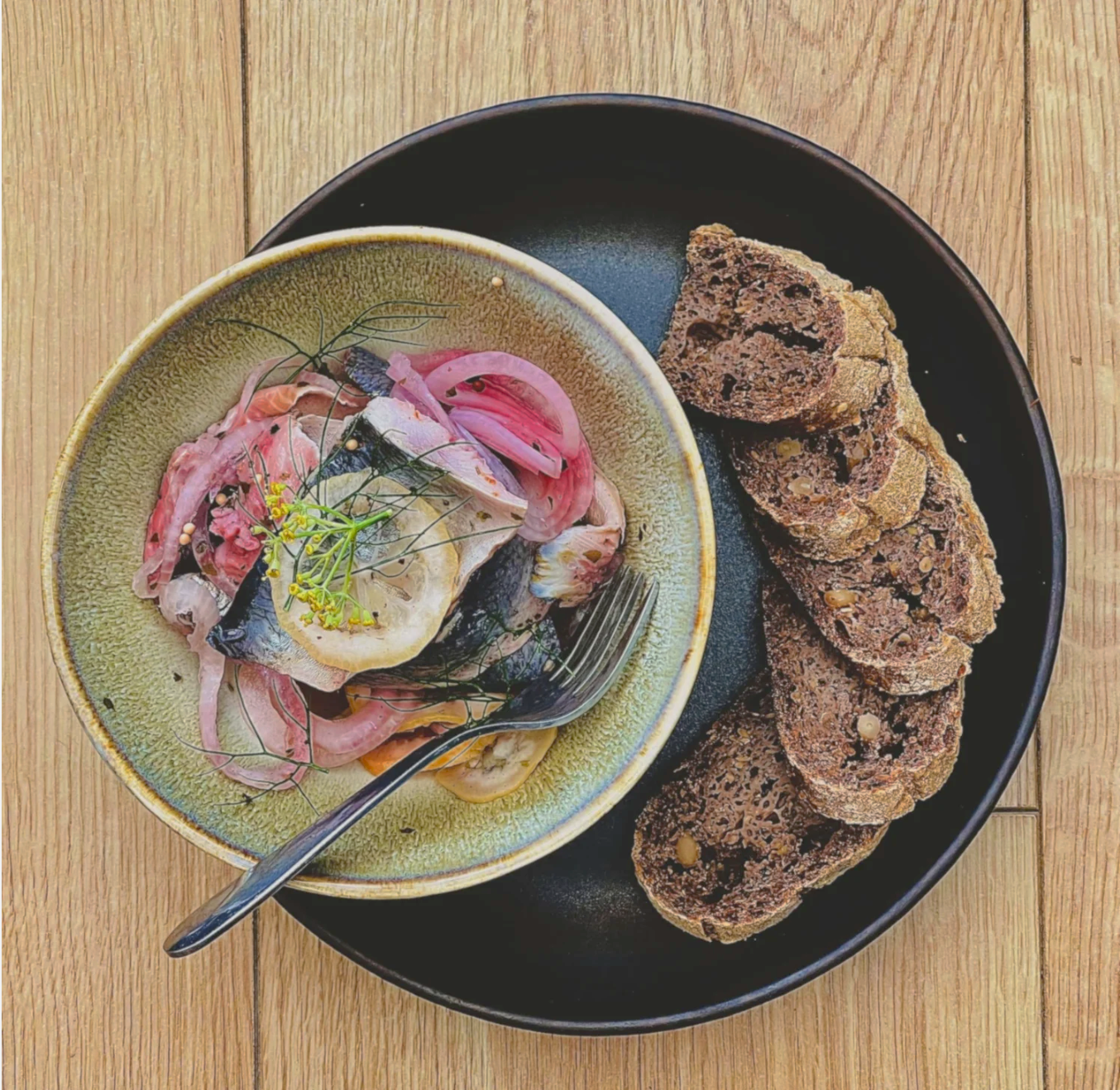
Serving suggestion